GoPro MISSION 1: a new bar for sideline footage
The GoPro MISSION 1 brings together three improvements — 8K resolution, a true one-inch sensor, and a cooler-running processor — that together amount to the largest jump in AI sports video quality we have seen. The difference is most visible where it matters most: the action around the goal, the endzone, and the far side of the field.
The AI sports video revolution
Not long ago, filming your team meant a parent in a folding chair, a phone on a tripod, and hours of footage that nobody ever watched. AI sports cameras changed that. You mount a camera on the sideline and walk away, and the game comes back as a finished full-game video and a reel of highlights — recorded, created, and shared without anyone standing behind the lens.
SeeUsPlay built its whole approach around that idea, with one important difference. Instead of squeezing the AI onto a tiny chip inside the camera, we send your footage to the cloud, where roughly a hundred times the processing power can analyze it at full resolution. The camera simply records; the cloud does the demanding work of finding the play, following it, and cutting the clips.
That footage does real work. It is the recruiting clip that gets a player noticed, the film session that fixes a back line, and the goal a family sends to grandparents three states away. Because the footage matters this much, the quality of what the camera captures matters a great deal too.
The limits of 4K and smaller sensors
There is a limitation here that rarely gets discussed. Most AI sports cameras record in 4K using relatively small sensors and then rely on digital zoom to push in on the action. On a wide field that is a great deal of zoom, and every time the system crops into a 4K frame it throws away pixels. With smaller sensors, the footage is often already a little "soft" so as zoom increases, the picture blurs, player features dissolve, and jersey numbers smear into a smudge.
The problem grows worse the farther the play is from the camera. A breakaway at the near touchline looks crisp, while the same move at the far goalmouth turns to mush. And the far side of the field is exactly where some of the most important action happens — the finish at the back post, the goal-line scramble, the touchdown in the far endzone. Those are the moments worth sending to a college coach, the ones families rewatch, and the ones a team studies to improve. With a small-sensor 4K camera and digital zoom, they are often the blurriest frames in the whole video.
Digital zoom cannot invent detail the sensor never captured. More zoom on a soft 4K frame from a small sensor only produces a bigger, softer picture — not a closer look.
How MISSION 1 changes the game
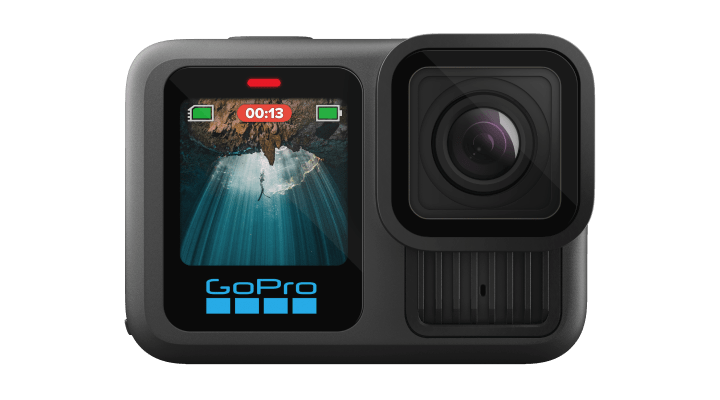
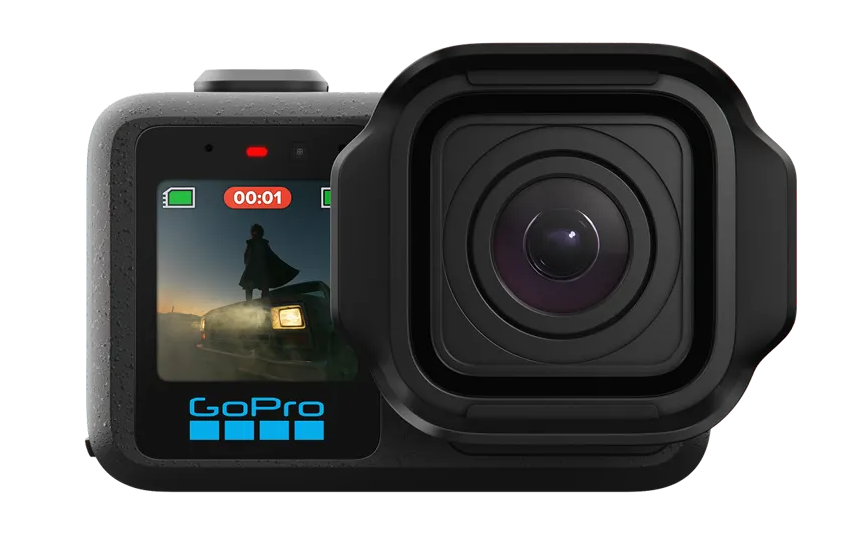
The GoPro MISSION 1 addresses the problem at its source. It offers more pixels to zoom into, a larger sensor to gather more light, and a new processor that runs much cooler than previous generations. Taken together, these three changes reset the ceiling on AI sports video quality.
Higher resolution
MISSION 1 records in 8K — 7,680 by 4,320 pixels, roughly four times the detail of 4K. For our cloud AI, that is four times the room to zoom. When the AI crops in to follow play to the far sideline, it works from a far richer frame, so the footage holds together instead of falling apart. Jersey numbers that would vanish at the far goal on a 4K camera remain legible on MISSION 1. For comparison, the GoPro HERO13 Black tops out at 5.3K; MISSION 1 captures about 2.3 times its pixels, and roughly four times those of a standard 4K sports camera.
A larger sensor
Resolution is only half of the story. MISSION 1 also moves to a true one-inch sensor, which has more than three times the light-gathering area of the HERO13 Black's 1/1.9-inch chip. A larger sensor pulls in more light — precisely what you need in the conditions sports actually happen in: an indoor gym, an overcast Saturday, a game under the lights. More light means a cleaner picture with less grain, which in turn gives the cloud AI's digital zoom better raw material to work with at every distance from the action.
| Specification | HERO13 Black | MISSION 1 |
|---|---|---|
| Sensor size | 1/1.9″ | 1″ (about 3.5× the area) |
| Maximum resolution | 5.3K | 8K |
| Effective pixels | 27.6 MP | 50 MP |
Cooling that lasts a full game
There is a reason most action cameras struggle to record in higher resolutions from 4K to 8K, and that reason is heat. Pushing that many pixels through a small body tends to warm the camera over a long recording. MISSION 1's new GP3 processor is designed to run cooler, which makes a real difference on the field. On a cool fall or spring day, the extra thermal headroom lets you record an entire game in 8K. On warm days, especially those with no breeze, you can fall back to 4K, which runs even cooler, and the larger one-inch sensor still produces incredibly sharp and vibrant footage.
MISSION 1 in the real world
Specifications tell one story; footage tells the real one. To show the difference 8K makes, we set up two SeeUsPlay Rigs side by side at the same lacrosse game — same height, same distance, the only variable the cameras. One Rig carried GoPro HERO13 Black cameras shooting 5.3K; the other, the new MISSION 1 cameras shooting 8K. Every frame below is the same face-off, captured at the same instant — the HERO13 Black's 5.3K on the left, MISSION 1's 8K on the right.
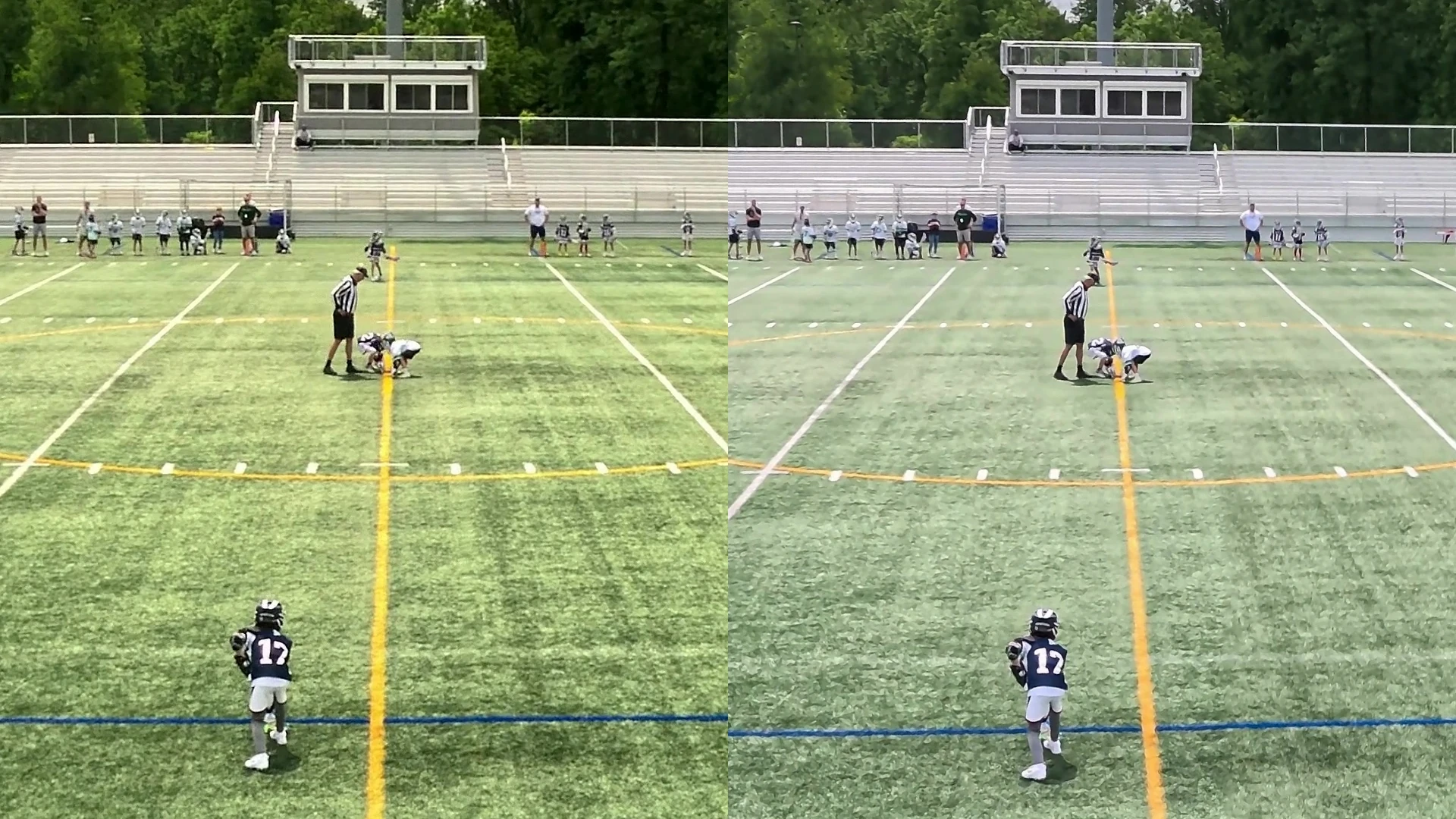
To see where the extra resolution actually pays off, we zoomed into three depths of the field — the far sideline, the center, and the near side.
The far sideline: detail that survives the distance
The gap between the two cameras is widest here. The HERO13 frame turns soft — players blur into the background and uniforms lose their edges. The MISSION 1 frame stays crisp: you can pick out helmet shapes, stick positions, and a jersey number that's barely legible in the 5.3K crop. For recruiting clips and opponent film study, that's the difference between "I think that's our kid" and a usable, identifiable play.
 5.3K
8K
5.3K
8K
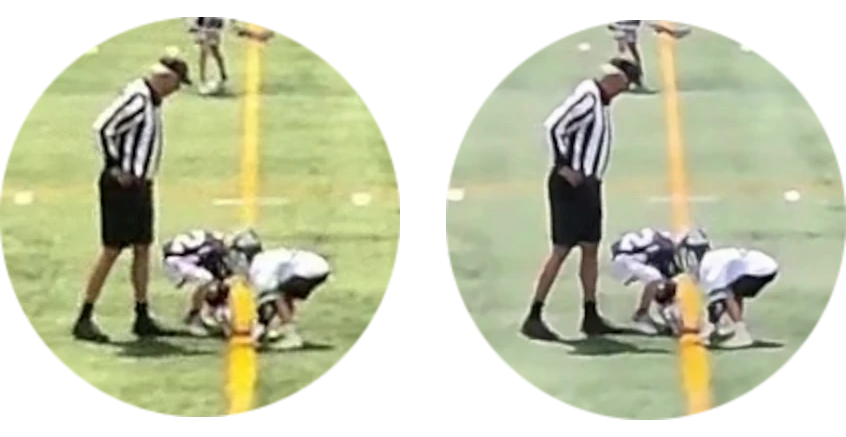
Center field: more detail in the thick of it
At midfield both cameras capture the moment — but MISSION 1 resolves noticeably more. Faces, jersey textures, and the official's stripes read cleaner, and color holds truer under bright sun. When the cloud AI digitally zooms in here to build a highlight, it has far more real detail to work with, so the cropped clip still looks sharp instead of mushy.
 5.3K
8K
5.3K
8K
The near side: the smallest difference
Up close the two cameras are at their most similar; the near player is sharp on both. Look at color depth and texture, though, and MISSION 1 still pulls ahead — richer navy in the jersey, a more defined weave, cleaner separation from the turf. It's a smaller margin here, exactly as you'd expect: the closer the action, the less resolution you need to capture it well.
 5.3K
8K
5.3K
8K
The takeaway: the resolution gap is smallest up close and widest at the far sideline — the hardest part of the field for any camera to capture, and often where the most important plays happen. That is where the extra resolution of 8K matters most.
MISSION 1 and the rest of the MISSION family are taking SeeUsPlay's video quality and zooming advantages to new levels — and although their body isn't identical to the HERO line, they work with your existing SeeUsPlay Rig with no changes.
- 8K native recording — up to roughly four times a 4K camera.
- A one-inch sensor with about 3.5 times the light-gathering area.
- A GP3 processor that sustains recording without thermal cutoffs.
- Full compatibility with your existing SeeUsPlay Rig.
MISSION 1 is the new flagship, but the right camera depends on your team. Our vendor-honest buying guide compares robot, full-field, and cloud-AI systems and explains how to avoid vendor lock-in.